














Transport routing

We’ll get your fleet and transport routes planned to maximise efficiency, cost and service.

COMMON TRANSPORT ROUTING CHALLENGES

Common transport routing challenges we're asked to solve

High transport costs

Poor vehicle utilisation

Excessive mileage

Inefficient routes

Delivery constraints

Wrong fleet profile

INTRODUCTION

Vehicle route optimisation

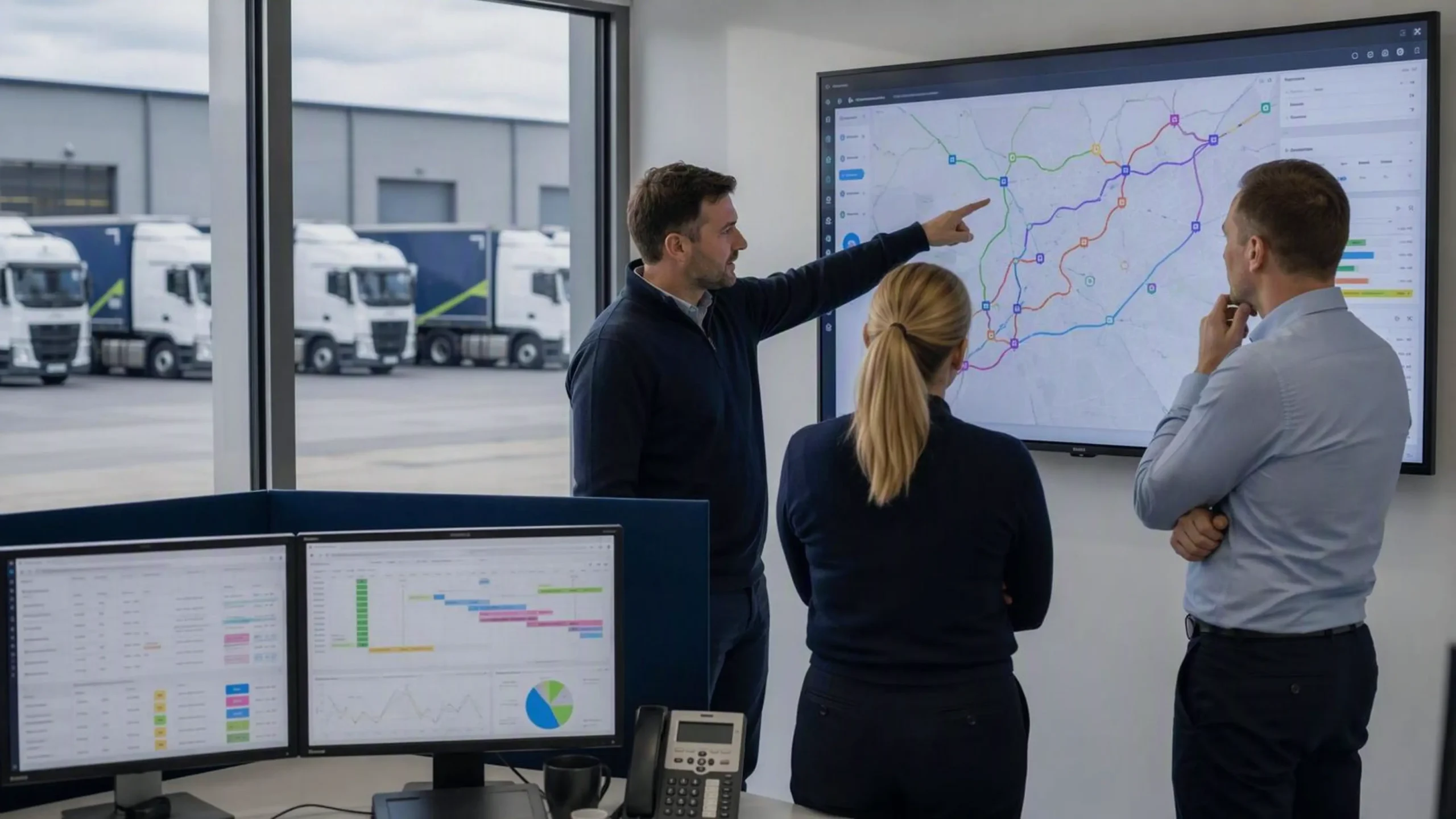
Transport routing is a mathematical optimisation problem with a large number of constraints including vehicle capacity, access restrictions, load configuration and delivery windows. We are experts at the modelling required to optimise fleet profiles and transport routing.

Our approach considers the interaction between routes, vehicles, drivers and customer requirements, helping businesses identify opportunities to reduce mileage, improve vehicle utilisation and make better use of available transport capacity. The result is a routing model that balances operational efficiency with the practical realities of delivering a reliable service.
TRUSTED BY LEADING ORGANISATIONS

TRANSPORT ROUTING

Reduce costs, improve service

Transportation is a major cost factor within any logistics operation. Often transport accounts for up to 70% of logistics spend and rarely is it less than 30%. Consequently, maximising the utilisation of transport assets is a main area of focus for transport routing.

The ultimate goal of transport routing is to minimise route time or distance, whilst maximising vehicle fill and reducing assets. Of course, this also needs to be balanced against service level agreements and operational constraints. This is where our consulting team excel; we can plan your transport operation at a granular level, whilst factoring in all constraints and service level requirements.

SERVICES

Transport improvement services

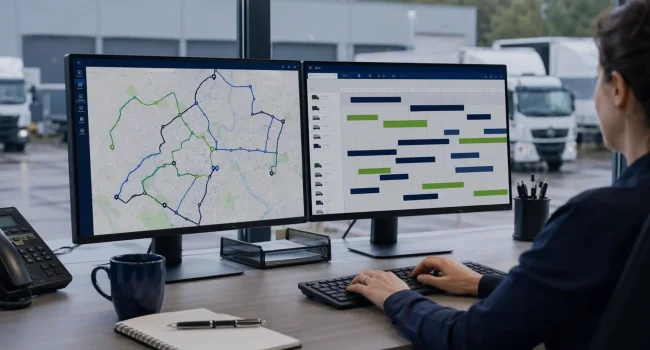
Daily route scheduling is an extension of what is commonly referred to, in mathematical optimisation terms, as the ‘Travelling Salesman Problem’. With daily route scheduling this optimisation problem is expanded due to several additional restrictions, including vehicle capacity limitations, maximum driver hours, delivery windows and requirements for both delivery and collection.

Our team of consultants are able to design the most efficient daily routes for any vehicle fleet using a combination of 3rd party software and our own in-house developed tools.

There are a large number of possible vehicle and trailer configurations available. From vans for B2C networks through to ‘supercube’ trailers and drawbar demountable configurations for B2B networks and primary trunking.

As part of our transport routing services, our team are able to determine the best vehicle type, or types, for any transport network. Through assessment of access restrictions, loading requirements, weight and volume constraints, driver licensing and fuel efficiency, our logistics consultants can model, test and propose the most cost and service efficient fleet configuration.

Where there are cross-border requirements for a transport operation, our logistics consultants can test the impact of differing mode selections, choosing from truck, rail, air and shipping.

Each mode has a different impact on service times and transport costs, but they also have a different impact to the level of inventory in the network and the requirement for warehousing. Our team are able to model and provide a cost benefit analysis for each option.

In logistics network design there is often a requirement to model multiple transport strategy scenarios. This is usually in response to ‘what if?’ questions when a business is, for example, considering insourcing it’s transport operation or merging logistics networks from acquisitions.

Our logistics consultants are able to design and computationally test multiple network designs, determining optimal facility locations, fleet profiles, vehicles numbers, driver requirements and budget operating costs. We are also able to consider, within strategic scenarios, the ‘trade-off’s’ of transport cost versus the number of warehouses in the logistics network.

It’s not uncommon for transport to account for 70% of a company’s logistics spend. Consequently it’s important to ensure that not only is transport routing efficient, but also the expenditure on assets and operating costs are efficient.

Using industry cost data, in combination with anonymous benchmarking between existing clients, our team can determine how efficient a company’s transport expenditure is, and what areas need to be improved. Elements benchmarked may include vehicle unit leasing, trailer leasing, driver costs, administration overheads and fuel efficiency performance.

FEATURED CASE STUDY

Transport network remodelling

National textile services business

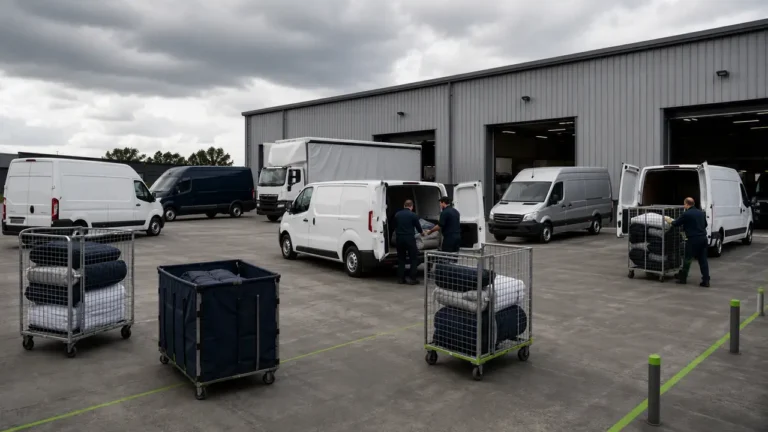
PTL Co modelled a national service network covering around 4,000 customers and 35 vehicles to identify practical transport improvements. The business operated a complex collection and delivery network with fixed service commitments and varied customer frequencies.

HERE TO HELP

Creating efficiency

When considering all of the different levels of service requirement and operational criteria in most logistics operations, transport routing can become highly complex. Time windows, varying vehicle capacities, access restrictions and driving hours are just some of the constraints that make modelling the most efficient vehicle routes highly challenging.

Using a combination of our own in-house developed tools, and specialist 3rd party software, we are able to model the most efficient transport operation giving insight into optimal fleet configuration, vehicle and trailer numbers, drivers shifts and daily route plans.

TRANSPORT ROUTING P2

INSIGHT

Transport articles & advice

CONTACT US

Tell us about your challenge

We’re happy to discuss your challenge and explore how we can help.
New Contact Form (Paul Trudgian)

We use your details only to respond to your enquiry. See our Privacy Policy